

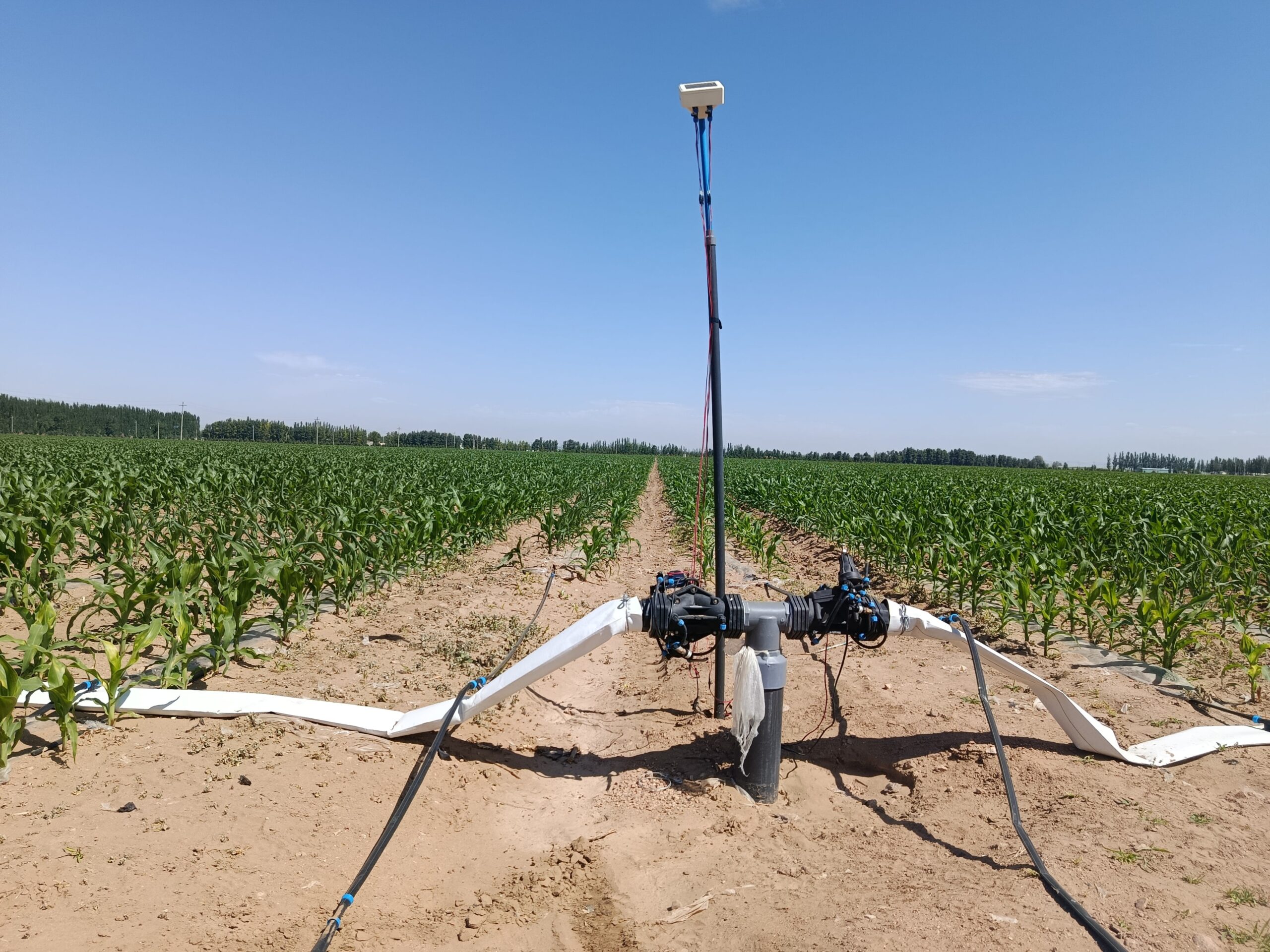
Many farms begin their smart irrigation journey by installing sensors.
Soil moisture sensors.
Weather stations.
Dashboards.
Mobile apps.
Analytics.
All useful tools — but only if the irrigation system can actually act on the data.
A common mistake is to collect more information before fixing the basic execution layer. It is like buying GPS before having a reliable car. You may know exactly where to go, but you still cannot get there properly.
The Real Problem Is Often Execution
In many cases, the farmer’s first estimate of irrigation requirement is already good enough.
The bigger issue is whether the irrigation system can deliver water reliably.
Common problems are simple:
- Unstable pressure
- Slow valve switching
- Uneven irrigation
- Uneven fertigation
- Manual valve operation
- No confirmation that irrigation actually happened
Sensors do not solve these problems. They only show more data about a system that may still be difficult to control.
A dashboard may show soil moisture beautifully on a phone or laptop. But that does not automatically convert into the right irrigation time, stable pressure, or uniform water delivery.
Control Comes First
A practical irrigation automation system should be built in the right order.
First: valve control.
The farm should be able to open, close, schedule, and verify irrigation blocks reliably.
Second: pump control.
The system should maintain pressure, manage flow, and coordinate pump operation with irrigation blocks.
Third: fertigation control.
Fertilizer injection should be consistent, measurable, and connected to the irrigation process.
Only after these layers are stable do sensors become truly useful.
Soil data, weather data, forecasts, and analytics can then improve decisions because the farm finally has the ability to execute those decisions.
From Data to Action
Sensors measure.
Controllers execute.
Automation improves consistency.
Smart irrigation should not be only about collecting more data. It should be about turning decisions into reliable field action.
At Agriocom, this is the foundation of our approach:
- AgrioValve for wireless valve control and pressure confirmation
- AgrioPump for pump and fertigation automation
- AgrioTens for soil-water tension monitoring
- AgriCommander for cloud-based irrigation management
The goal is not just a better dashboard.
The goal is a stable, predictable, automatic irrigation system that can later be optimized with data.
Build control first. Then add intelligence.